
The Ultimate Street-Legal Race Machines: 10 Homologation Specials That Defined Automotive Legends
For decades, the world of motorsport has served as the ultimate proving ground for automotive innovation. While the roar of a race car on Sunday excites millions, the true engineering marvel often lies in the delicate dance between competition regulations and road-legal production. Enter the “homologation special”—a breed of performance vehicle built not primarily for the showroom, but to satisfy the stringent rules that allow a manufacturer to compete on the track. These cars represent the purest distillation of racing technology, stripped of everyday compromises and engineered for one purpose: to win.
From the legendary rally stages of the World Rally Championship (WRC) to the high-stakes endurance battles of Le Mans, homologation specials have given rise to some of the most iconic, thrilling, and visually dramatic automobiles ever created. While their numbers are few and their price tags astronomical, their legacy endures, proving that sometimes, the most special cars are those designed for the heat of competition.
Join us as we delve into the history, engineering, and enduring allure of the greatest homologation specials ever conceived. We’ll explore the cars that redefined performance benchmarks, the regulations that birthed legends, and the indelible mark these street-legal race machines have left on automotive culture.
The Birth of the Legend: What Makes a Homologation Special?
Before diving into our top picks, it’s essential to understand what defines a homologation special. In essence, these vehicles exist because racing series like the WRC, Group B, Group A, or the FIA GT Championship mandate that race cars must be based on production models. To ensure fair competition and prevent manufacturers from fielding pure prototypes, specific rules dictate the minimum number of road-legal variants that must be produced.

This requirement, known as “homologation,” led to an intriguing loophole: manufacturers could build road cars that were essentially detuned race cars, complete with racing aerodynamics, reinforced chassis, and high-performance engines. The result? Street-legal machines that offered a driving experience far removed from their standard counterparts—raw, visceral, and uncompromising.
The Reigning Champion: Lancia Stratos HF Stradale
When discussing the most iconic homologation special, the Lancia Stratos HF Stradale often takes the crown. Born from the visionary mind of designer Marcello Gandini at Bertone, the Stratos was conceived specifically for rallying. Lancia needed a car that could outmaneuver the competition on treacherous rally stages, and the mid-engined, wedge-shaped Stratos delivered in spectacular fashion.
Powered by the legendary Ferrari Dino V6 engine, the Stratos boasted a 2.4-liter displacement, producing around 190 horsepower in road trim. While seemingly modest by today’s standards, this rear-wheel-drive powerhouse, combined with a remarkably short wheelbase and lightweight fiberglass body, made the Stratos an agile and formidable force on the rally circuit.
The Stratos dominated the World Rally Championship in the mid-1970s, securing three consecutive manufacturers’ titles from 1974 to 1976. Its aggressive, almost alien design—characterized by a steeply raked windshield, short nose, and wide stance—made it instantly recognizable and highly desirable. Only around 490 road-legal examples were ever produced, making the Stratos HF Stradale one of the most sought-after and valuable homologation specials in existence.
Key Engineering Innovation: The Stratos pioneered the mid-engine layout for rally cars, placing the engine between the driver and rear axle for optimal weight distribution and handling—a configuration that remains standard in top-tier rally cars today.
The German Powerhouse: Audi Sport Quattro
The Audi Sport Quattro represents a pivotal moment in rally history—the era of Group B. When Audi introduced the revolutionary Quattro in 1981, it shattered the status quo by bringing permanent all-wheel drive to the WRC. This innovation gave Audi an unprecedented advantage on loose surfaces, leading to dominance in the early 1980s.
However, as competitors like Peugeot and Lancia developed shorter, more agile cars, Audi responded with the Sport Quattro in 1984. To meet Group B regulations, Audi significantly shortened the wheelbase by 320mm, reducing weight and improving maneuverability. Under the hood, the legendary 2.1-liter inline-five engine was boosted to produce around 302 horsepower in road-going form.
While the Sport Quattro’s competitive career was tragically cut short by the ban on Group B in 1986, it left an indelible mark on automotive history. Only 224 road-legal examples were produced, each a testament to Audi’s commitment to rally dominance. The Sport Quattro remains a symbol of the raw power and engineering audacity of the Group B era.
High-CPC Keyword Integration: For enthusiasts seeking raw, analog driving experiences, the Audi Sport Quattro price reflects its legendary status, with well-maintained examples fetching seven-figure sums in today’s collector market.
The Endurance Conqueror: Porsche 911 GT1 Strassenversion
When the FIA introduced the GT1 regulations in the 1990s, it sparked one of the most competitive eras in endurance racing history. Porsche, eager to reclaim overall victory at the 24 Hours of Le Mans, devised a clever strategy: build a race car first and then create road-legal versions for homologation. The result was the Porsche 911 GT1 Strassenversion.
Unlike traditional 911s, the GT1 featured a mid-engine layout—a departure from the brand’s iconic rear-engine configuration. This engineering decision allowed for better weight distribution and aerodynamic optimization for racing. The road version, powered by a 3.2-liter twin-turbocharged flat-six engine, produced approximately 536 horsepower—a staggering figure for its time.
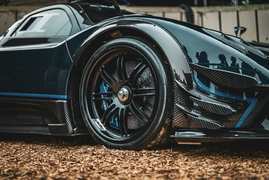
Regulations initially required 25 road cars, but Porsche produced fewer, stopping short of the full quota before exiting the GT1 class. This exclusivity, combined with its race-proven pedigree, makes the 911 GT1 Strassenversion one of the most coveted and valuable homologation specials ever created, with Porsche GT1 for sale listings commanding prices well into the multi-million-dollar range.
Secondary Keyword Inclusion: The 911 GT1 homologation process highlighted the extreme lengths manufacturers would go to compete at the highest level of endurance racing, blurring the lines between road cars and race prototypes.
The Japanese Legend: Toyota GT-One
While German and Italian manufacturers dominated the headlines, Japanese automakers also embraced the homologation special concept with characteristic engineering prowess. One of the most extreme examples is the Toyota GT-One.
Built to compete in the FIA GT1 class, the GT-One was a purebred race car that bore only a passing resemblance to its road-going counterparts. Featuring a mid-mounted 3.6-liter twin-turbocharged V8, the race version produced over 600 horsepower and utilized advanced aerodynamics to generate significant downforce.
Toyota famously produced just one road-legal example, ostensibly for homologation purposes. This solitary car, though equipped with some road-going amenities like leather seats, retained most of its racing DNA. It never went on sale, with Toyota retaining ownership to this day—a true unicorn in the world of automotive collectibles.
The Rally Icon: Ford RS200
The Ford RS200 represents Ford’s ambitious foray into the Group B era of rallying. Recognizing that its traditional front-wheel-drive Escort platform was uncompetitive against the mid-engined, all-wheel-drive rivals, Ford commissioned a purpose-built rally car.
The RS200 was a radical departure from anything Ford had produced before. Featuring a compact, mid-mounted 1.8-liter turbocharged Cosworth engine and a lightweight composite body, the road-going version produced around 250 horsepower. In rally trim, however, the RS200 could unleash as much as 450 horsepower, devastatingly effective on loose surfaces.
Production of the RS200 was limited to around 200 units, ensuring its eligibility for Group B competition. While the car’s competitive career was cut short by the tragic ban on Group B in 1986, the RS200 remains an icon of the era’s reckless engineering and motorsport ambition. For collectors, the Ford RS200 value continues to appreciate, solidifying its status as a legendary homologation special.
High-CPC Keyword Integration: Enthusiasts seeking to experience the visceral thrill of the RS200 can explore used Ford RS200 for sale listings, though availability is extremely limited and prices reflect its rarity.
The All-Weather Warrior: Subaru Impreza WRX STI Type RA
Subaru cemented its legacy in the World Rally Championship with the Impreza WRX STI. While the production WRX STI is a formidable performance car, the Subaru Impreza WRX STI Type RA represents the purest expression of Subaru’s rally-bred engineering.
The Type RA (Record Attempt) homologation special featured enhanced engine tuning, producing around 271 horsepower—significantly more than the standard WRX STI of the era. Additionally, it included a driver-controlled center differential, allowing drivers to optimize torque distribution for varying conditions.
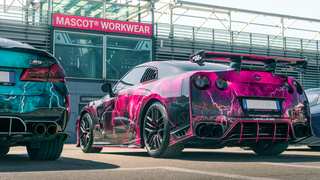
These enhancements were crucial for Subaru’s WRC campaign, where the Impreza stormed to multiple manufacturers’ and drivers’ titles. The Type RA embodied the rally-proven technology that made Subaru a household name