
The Perfect Automotive Performance Formula: When the Line Between Race Cars and Road Cars Disappears
From the roar of a perfectly tuned engine echoing through the Swiss Alps to the visceral grip of a track-honed chassis clinging to the asphalt at the Nürburgring, the world of high-performance vehicles offers an unparalleled thrill. But what happens when the ultimate expression of automotive engineering isn’t designed for the showroom, but for the racetrack? This is the realm of the homologation special, where the pursuit of victory on the circuit directly shapes the most extreme and desirable road cars ever conceived. For enthusiasts who crave the razor-sharp focus of a race machine with just enough civility to be street-legal, the homologation special represents the pinnacle of automotive passion and engineering prowess.
For over a decade, the automotive landscape has been reshaped by an insatiable demand for performance that pushes the boundaries of what was once thought possible on public roads. While many manufacturers offer potent “performance packages” or sport-tuned trims, true homologation specials are a different breed entirely. They are born from a specific, often arcane, set of racing regulations that mandate the production of a certain number of road-legal versions of a competition car. This requirement creates a fascinating paradox: manufacturers are compelled to engineer road-going vehicles that are, at their core, race cars. The result is a lineage of automotive legends—machines that blend the raw, unfiltered drama of motorsport with the practicalities of street legality, offering a driving experience that is both intoxicatingly potent and deeply rewarding.

The Evolution of the Race-Bred Road Car
The concept of building road-legal versions of competition cars is not a new one. In the early days of motorsport, the distinction between race cars and production cars was often blurred. However, the mid-to-late 20th century saw the formalization of racing categories, such as Group A and Group B rallying, and various GT racing classes, which imposed strict rules on the construction and modification of vehicles. These regulations, designed to ensure fair competition, inadvertently gave rise to some of the most iconic and sought-after cars in history.
The allure of these homologation specials lies in their unfiltered engineering. Unlike standard production cars, which are often compromised by the need to balance performance with comfort, safety, and manufacturing costs, homologation specials are built with a singular purpose: to win races. Every component, from the engine and transmission to the suspension and aerodynamics, is optimized for peak performance. This uncompromising approach results in vehicles that deliver a driving experience that is both visceral and deeply engaging, offering a level of feedback and control that is simply unmatched by their more conventional counterparts.
The Golden Age of Homologation Specials
The 1980s and 1990s are widely regarded as the golden age of homologation specials. During this period, manufacturers pushed the boundaries of automotive engineering, creating machines that would forever be etched in the annals of motorsport history. One of the most iconic examples from this era is the Audi Sport Quattro. Developed to compete in the FIA’s Group B rallying category, the Sport Quattro was a radical departure from conventional rally cars. Its short-wheelbase design, coupled with Audi’s revolutionary all-wheel-drive system, gave it an unparalleled advantage on the challenging rally stages of the world.
The road-going version of the Sport Quattro, while tamer than its competition counterpart, still delivered an exhilarating driving experience. With its powerful five-cylinder engine and advanced all-wheel-drive system, it offered a level of performance that was simply breathtaking for its time. The Sport Quattro’s success on the rally stages cemented its legendary status, and today, it remains one of the most sought-after homologation specials ever produced.
Another icon from this era is the Lancia Stratos HF Stradale. Designed from the ground up for rallying, the Stratos was a mid-engined marvel that combined a lightweight fiberglass body with a powerful Ferrari Dino V6 engine. Its striking wedge shape and aggressive stance made it instantly recognizable, while its exceptional handling and performance capabilities made it a dominant force in motorsport. The Stratos Stradale, produced in limited numbers to meet homologation requirements, remains a highly prized collector’s item, celebrated for its purity of purpose and its undeniable motorsport heritage.
The Evolution of Racing Categories and Homologation Requirements
The evolution of racing categories has played a significant role in shaping the landscape of homologation specials. Early racing series often blurred the lines between production cars and purpose-built racers. However, as motorsport matured, regulations became more defined, leading to the development of distinct categories for different types of racing. Group A, for example, mandated that race cars be based on production models, requiring manufacturers to produce a certain number of road-going versions of their competition cars.
The Group B era of rallying, which ran from 1982 to 1986, represented a peak in homologation special development. With minimal restrictions and a focus on outright performance, manufacturers produced some of the most extreme and powerful rally cars ever seen. This era also saw the rise of purpose-built rally homologation specials, such as the Ford RS200 and the Peugeot 205 Turbo 16, which were designed from the outset for competition and then adapted for road use.
The demise of Group B in 1986, following a series of tragic accidents, led to a shift in rallying regulations. The more conservative Group A regulations emphasized production-based cars, resulting in a different breed of homologation specials. The Subaru Impreza WRX STI Type RA, for instance, was a prime example of this new approach, offering a race-bred, all-wheel-drive platform that was both road-legal and highly competitive.
The Evolution of GT Racing and its Homologation Specials
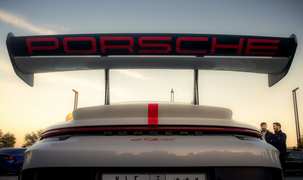
Parallel to the development of rallying, GT racing has also produced some of the most exceptional homologation specials. The FIA’s GT1 regulations, introduced in the 1990s, were designed to govern top-tier endurance racing, including the legendary 24 Hours of Le Mans. These regulations required manufacturers to produce road-legal versions of their GT1 race cars, leading to the creation of some of the most exotic and sought-after homologation specials ever produced.
The Porsche 911 GT1 Strassenversion is a prime example of this era. Developed to compete against the dominant McLaren F1 GTR, the 911 GT1 featured a mid-mounted, twin-turbocharged flat-six engine and a lightweight carbon fiber construction. The road-legal version, produced in limited numbers, combined race-bred performance with a degree of road-going civility, making it a highly coveted collector’s item.
The Mercedes-Benz CLK GTR is another iconic GT1 homologation special. Built to challenge Porsche’s dominance in GT racing, the CLK GTR featured a naturally aspirated V12 engine and a lightweight, carbon fiber monocoque chassis. The road-legal version, produced in limited numbers, offered a level of performance that was simply breathtaking, with its powerful engine and advanced aerodynamic design. The CLK GTR remains a symbol of the extreme engineering that characterized the GT1 era, representing the pinnacle of race-bred performance for the road.
The Modern Era: Adapting Homologation Principles to Contemporary Regulations
While the golden age of homologation specials may have passed, the principles of race-bred performance continue to influence the automotive industry. Contemporary racing regulations, such as those governing the World Rally Championship (WRC) and various GT racing series, still require manufacturers to produce road-legal versions of their competition cars. However, the nature of these requirements has evolved, reflecting changes in technology, environmental regulations, and market demands.
The Toyota GR Yaris is a prime example of a modern homologation special. Developed to meet the WRC’s requirement for a certain number of production-volume bodyshells, the GR Yaris is a purpose-built, all-wheel-drive hot hatch that delivers exceptional performance. Its lightweight construction, potent turbocharged engine, and advanced all-wheel-drive system make it a formidable force on both road and track. The GR Yaris represents a new generation of homologation specials, demonstrating that the principles of race-bred performance can be successfully adapted to contemporary regulations and market expectations.
The Enduring Appeal of Homologation Specials
The enduring appeal of homologation specials lies in their unique blend of race-bred performance and road-going capability. These vehicles represent the ultimate expression of automotive passion, offering a level of driving engagement and performance that is simply unmatched by their more conventional counterparts. The visceral connection between driver and machine, the intoxicating sound of a high-performance engine, and the confidence-inspiring handling characteristics all combine to create an unparalleled driving experience.
For collectors and enthusiasts, homologation specials represent a tangible link to the golden age of motorsport. Each vehicle tells a story of competition, innovation, and engineering excellence. The rarity of these vehicles, often produced in limited numbers to meet homologation requirements, further enhances their desirability. The opportunity to own a piece of motorsport history, a vehicle that was born from the crucible of competition, is a dream for many automotive enthusiasts.
Beyond the emotional appeal, homologation specials also represent a fascinating case study in automotive engineering. The challenges of adapting race-bred technology for road use, the compromises that must be made, and the innovative solutions that are developed all contribute to the rich tapestry of automotive history. These vehicles push the boundaries of what is possible, demonstrating the relentless pursuit of performance that drives the automotive industry forward.
The Future of Race-Bred Road Cars

As automotive technology continues to evolve, the future of race-bred road cars will undoubtedly take new and exciting forms. With the rise of electrification and autonomous driving technologies, the definition of a high-performance vehicle is expanding. However, the core principles of homologation specials